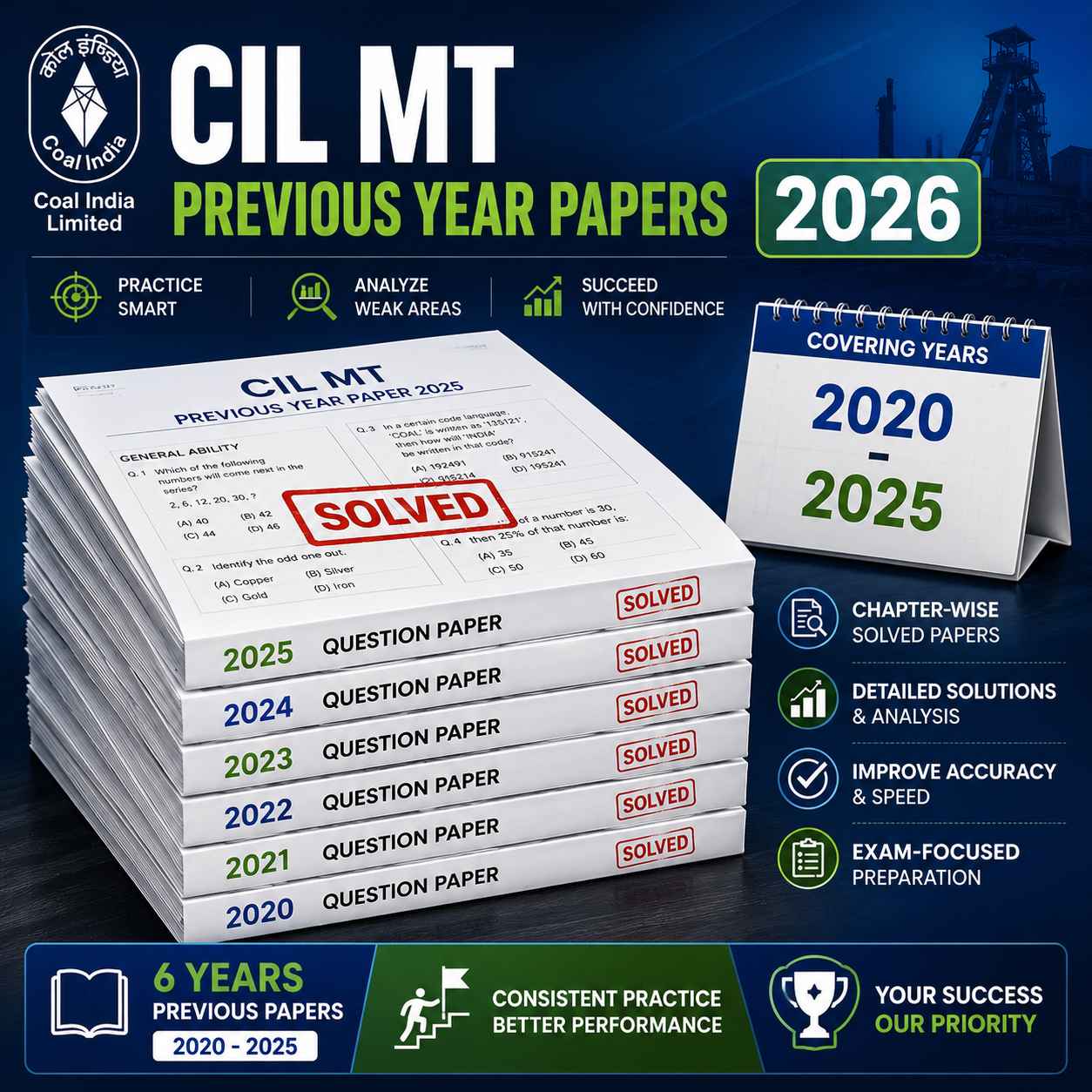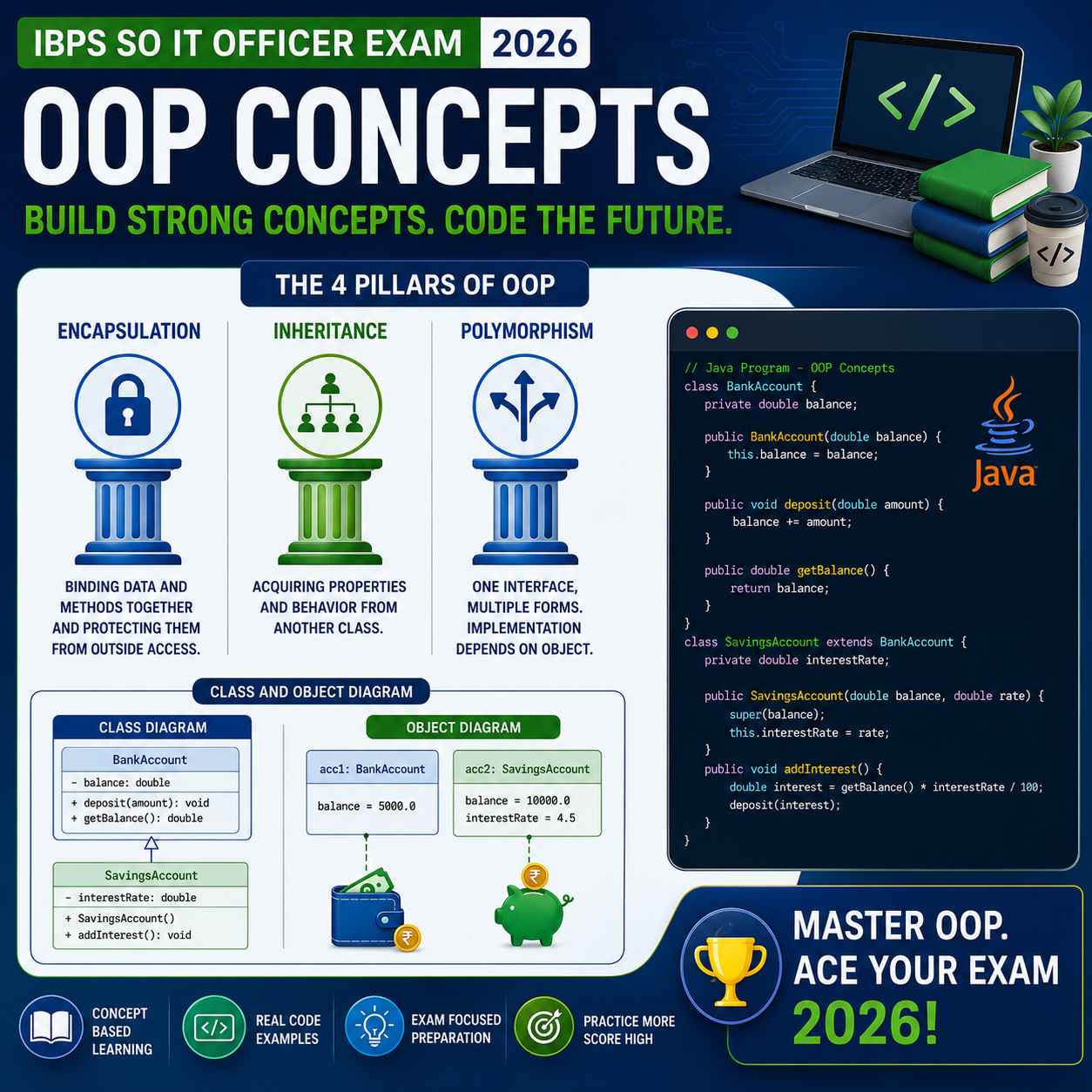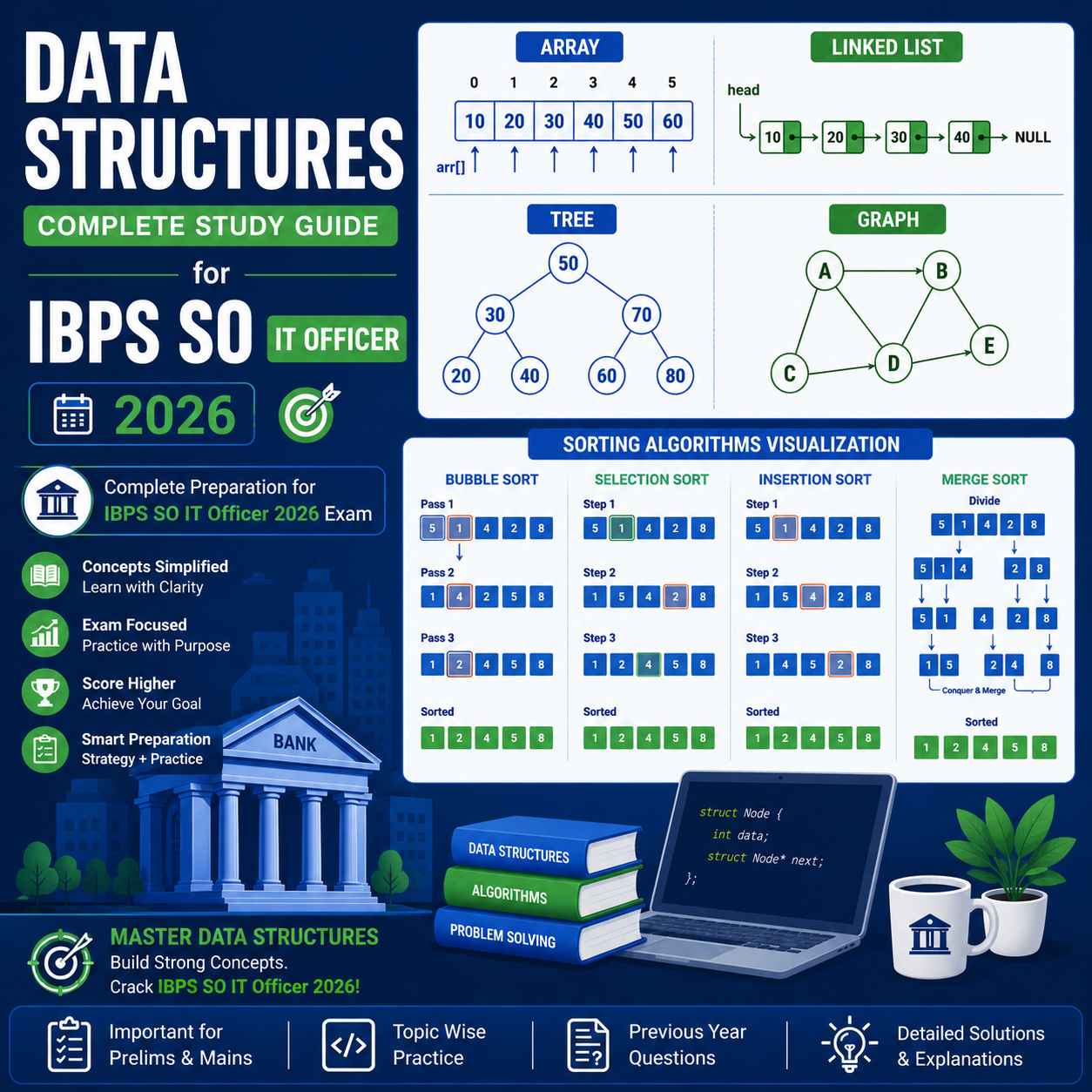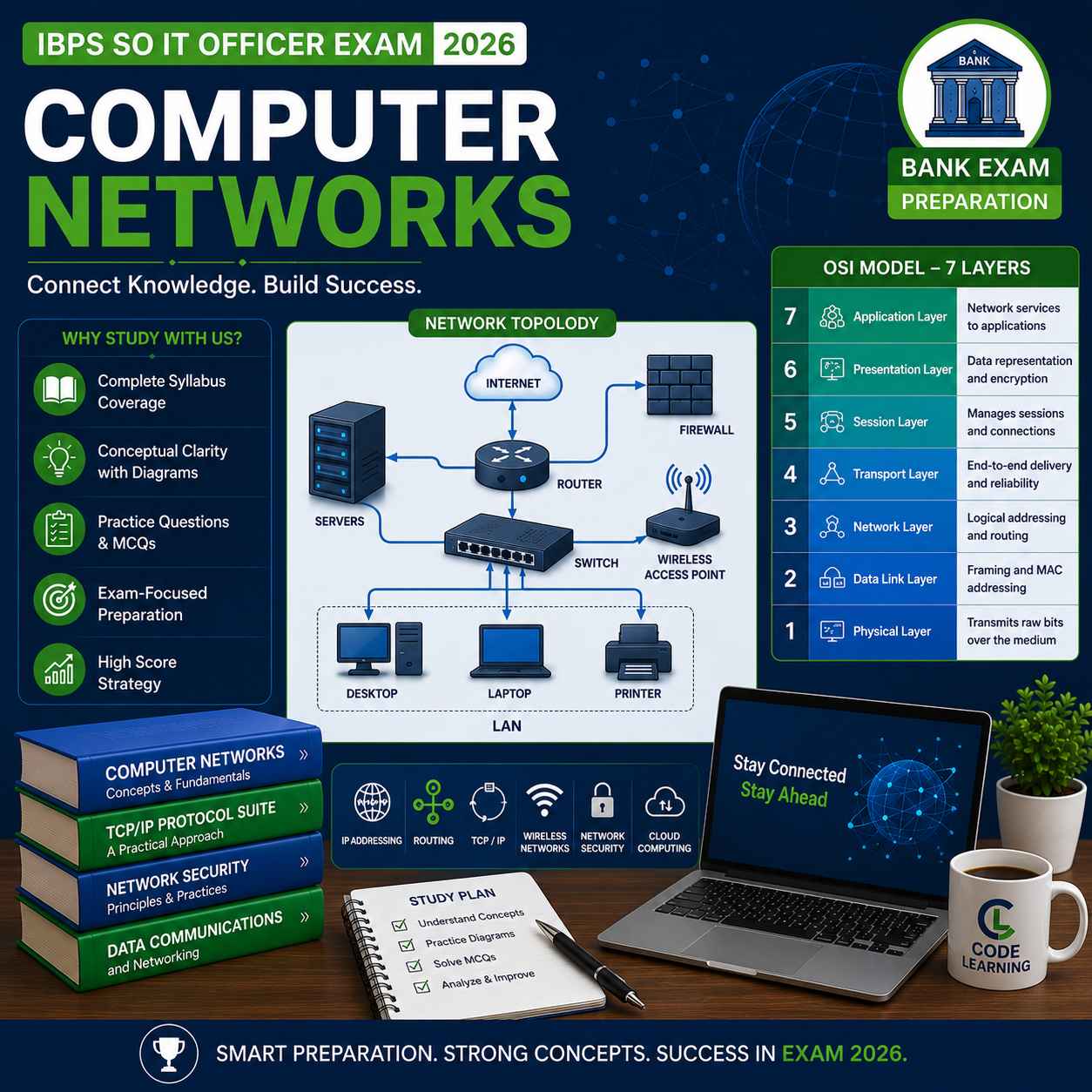
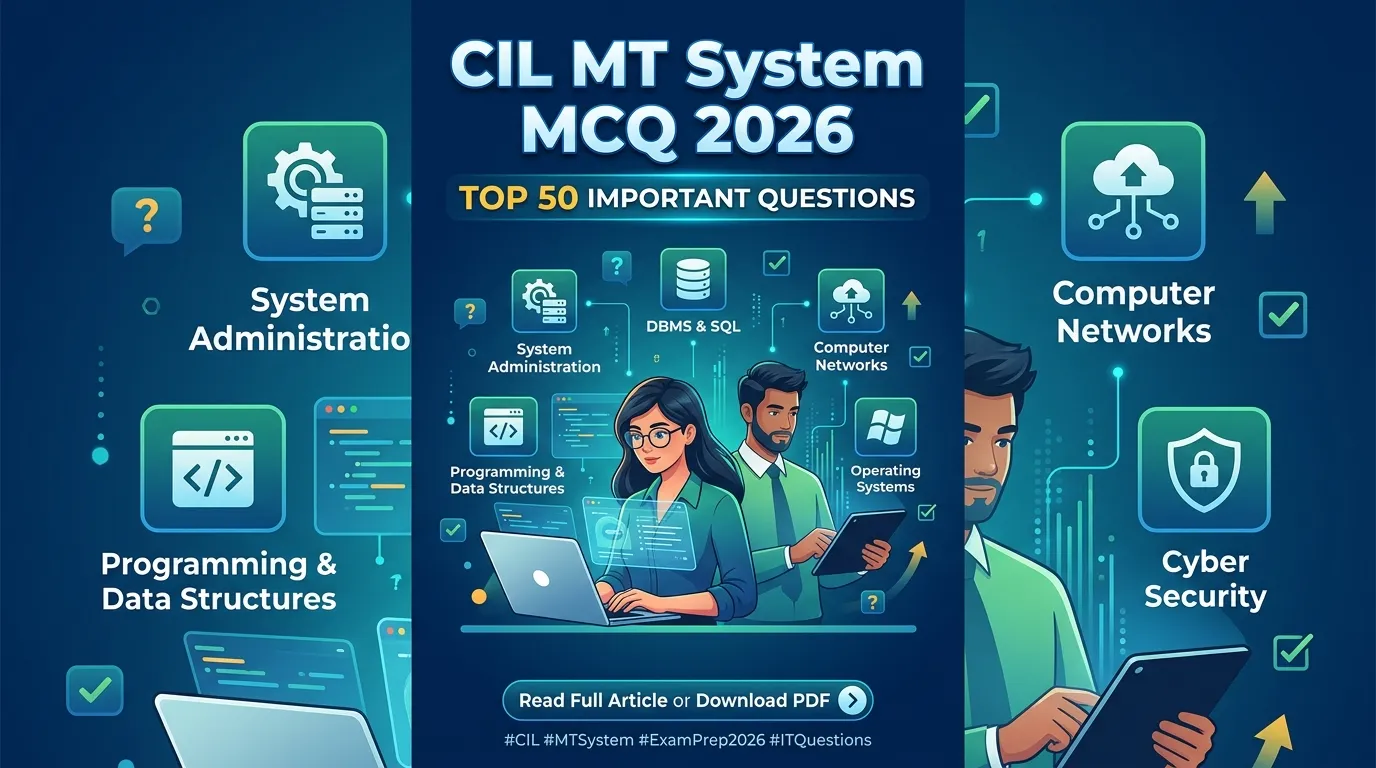
CIL MT System MCQ 2026 practice is very important for candidates preparing for Coal India Limited Management Trainee System discipline. The System paper usually needs strong command over core computer science subjects like DBMS, Operating System, Computer Networks, Data Structures, Programming, Software Engineering and Computer Fundamentals.
Coal India Limited is one of the most important public sector companies in India, and the Management Trainee exam is competitive. Candidates should always verify official recruitment details from the official CIL application portal or Coal India website because application dates, instructions and links can change. The official recruitment portal has shown candidate registration, login, advertisement and application instructions for CIL recruitment.
This article gives you top 50 important CIL MT System MCQs with answers. These questions are useful for quick revision, mock test practice and last-minute preparation.
For complete subject-wise preparation, also read our CIL MT Syllabus 2026 and CIL MT Mock Test.
Why CIL MT System MCQ 2026 Practice Is Important
CIL MT System discipline is technical. You cannot prepare it only by reading theory. You need MCQ practice because the exam checks your ability to identify the correct concept quickly.
Important subjects for CIL MT System include:
DBMS
Operating System
Computer Networks
Data Structures
Programming
Software Engineering
Computer Fundamentals
Cyber Security Basics
Coal India Limited GK
Current Affairs
CIL MT System MCQ 2026 preparation should be done topic-wise. First revise one subject, then solve MCQs from that subject. After that, solve mixed mock tests.
If you are also preparing for IT Officer exams, you can revise related topics from our DBMS for IBPS SO IT Officer 2026 and Operating System for IBPS SO IT Officer 2026 guides.
Important Topics for CIL MT System Exam
| Subject | Important Topics |
|---|---|
| DBMS | Keys, SQL, Normalization, ACID, Transactions |
| Operating System | Process, Thread, Deadlock, Scheduling, Memory |
| Computer Networks | OSI, TCP/IP, IP Addressing, DNS, HTTP, Devices |
| Data Structures | Array, Stack, Queue, Linked List, Tree, Graph |
| Programming | C basics, OOP, Loops, Functions, Pointers |
| Software Engineering | SDLC, Testing, Models, Requirement Analysis |
| Computer Fundamentals | Hardware, Software, Number System, Memory |
| CIL GK | Headquarters, Subsidiaries, Coal sector basics |
The Ministry of Coal lists Coal India Limited and its major coal companies such as ECL, BCCL, CCL, NCL, WCL, SECL, MCL and CMPDI among coal-sector organisations, so candidates should also revise basic CIL organisation knowledge for the exam.
Quick Revision Before CIL MT System MCQs
Before solving CIL MT System MCQ 2026 questions, revise these important points:
Primary Key uniquely identifies each row.
Foreign Key connects two tables.
1NF removes repeating groups.
2NF removes partial dependency.
3NF removes transitive dependency.
Deadlock needs mutual exclusion, hold and wait, no preemption and circular wait.
TCP is reliable and connection-oriented.
UDP is faster but connectionless.
Stack follows LIFO.
Queue follows FIFO.
Binary Search works only on sorted data.
Router works at Network Layer.
Switch works at Data Link Layer.
Now let’s start the CIL MT System MCQ 2026 practice set.
CIL MT System MCQ 2026 — Top 50 Questions with Answers
Q1. DBMS stands for:
A. Data Backup Management System
B. Database Management System
C. Digital Base Monitoring System
D. Data Binary Mapping System
Answer: B. Database Management System
Q2. Which key uniquely identifies each record in a table?
A. Foreign Key
B. Primary Key
C. Candidate Number
D. Duplicate Key
Answer: B. Primary Key
Q3. Foreign key is used to:
A. Delete a table
B. Connect two tables
C. Sort records
D. Encrypt database
Answer: B. Connect two tables
Q4. SQL stands for:
A. Simple Query Language
B. Structured Query Language
C. Standard Queue Logic
D. System Query Link
Answer: B. Structured Query Language
Q5. Which SQL command is used to retrieve data?
A. INSERT
B. UPDATE
C. SELECT
D. DELETE
Answer: C. SELECT
Q6. Which command is used to create a table?
A. CREATE
B. MAKE
C. GENERATE
D. BUILD
Answer: A. CREATE
Q7. Which command belongs to DDL?
A. SELECT
B. INSERT
C. CREATE
D. UPDATE
Answer: C. CREATE
Q8. Which normal form removes repeating groups?
A. 1NF
B. 2NF
C. 3NF
D. BCNF
Answer: A. 1NF
Q9. Which ACID property means all-or-nothing?
A. Atomicity
B. Consistency
C. Isolation
D. Durability
Answer: A. Atomicity
Q10. Which command permanently saves transaction changes?
A. ROLLBACK
B. COMMIT
C. SAVEPOINT
D. DELETE
Answer: B. COMMIT
Operating System MCQs
Q11. Operating System is:
A. Application software
B. System software
C. Database only
D. Hardware only
Answer: B. System software
Q12. Which of the following manages computer hardware resources?
A. Compiler
B. Operating System
C. Web browser
D. Text editor
Answer: B. Operating System
Q13. A program in execution is called:
A. File
B. Process
C. Folder
D. Package
Answer: B. Process
Q14. Which scheduling algorithm gives CPU to the process that arrives first?
A. Round Robin
B. FCFS
C. SJF
D. Priority Scheduling
Answer: B. FCFS
Q15. Round Robin scheduling uses:
A. Time quantum
B. Primary key
C. Foreign key
D. IP address
Answer: A. Time quantum
Q16. Deadlock occurs when:
A. Processes wait for each other forever
B. CPU becomes faster
C. Memory increases
D. File is deleted
Answer: A. Processes wait for each other forever
Q17. Which is not a necessary condition for deadlock?
A. Mutual Exclusion
B. Hold and Wait
C. Circular Wait
D. Data Normalization
Answer: D. Data Normalization
Q18. Virtual memory uses:
A. Disk space as extension of main memory
B. Printer memory only
C. Keyboard buffer only
D. Monitor memory
Answer: A. Disk space as extension of main memory
Q19. Page fault occurs when:
A. Required page is not in main memory
B. File is saved
C. CPU is idle
D. Process is completed
Answer: A. Required page is not in main memory
Q20. Semaphore is used for:
A. Process synchronization
B. Image editing
C. File compression
D. Database sorting
Answer: A. Process synchronization
Computer Networks MCQs
Q21. OSI model has how many layers?
A. 4
B. 5
C. 7
D. 8
Answer: C. 7
Q22. Which OSI layer is responsible for routing?
A. Physical Layer
B. Data Link Layer
C. Network Layer
D. Application Layer
Answer: C. Network Layer
Q23. TCP stands for:
A. Transfer Control Process
B. Transmission Control Protocol
C. Technical Code Program
D. Transmission Computer Port
Answer: B. Transmission Control Protocol
Q24. UDP is:
A. Connection-oriented
B. Connectionless
C. Always reliable
D. Used only for email
Answer: B. Connectionless
Q25. DNS is used to:
A. Convert domain name to IP address
B. Send email
C. Create database
D. Compress files
Answer: A. Convert domain name to IP address
Q26. HTTP default port number is:
A. 21
B. 25
C. 80
D. 443
Answer: C. 80
Q27. HTTPS default port number is:
A. 80
B. 443
C. 53
D. 110
Answer: B. 443
Q28. Router works at which layer?
A. Physical Layer
B. Data Link Layer
C. Network Layer
D. Presentation Layer
Answer: C. Network Layer
Q29. Switch mainly uses:
A. MAC address
B. IP address only
C. Port number only
D. Domain name
Answer: A. MAC address
Q30. IPv4 address is:
A. 16-bit
B. 32-bit
C. 64-bit
D. 128-bit
Answer: B. 32-bit
Data Structures MCQs
Q31. Which data structure follows LIFO?
A. Queue
B. Stack
C. Tree
D. Graph
Answer: B. Stack
Q32. Queue follows:
A. LIFO
B. FIFO
C. FILO
D. Random order
Answer: B. FIFO
Q33. Which operation inserts an element into stack?
A. enqueue
B. dequeue
C. push
D. pop
Answer: C. push
Q34. Which operation removes an element from queue?
A. pop
B. dequeue
C. push
D. peek
Answer: B. dequeue
Q35. Array elements are stored in:
A. Contiguous memory locations
B. Random files only
C. Separate folders
D. Network packets
Answer: A. Contiguous memory locations
Q36. Binary search works on:
A. Sorted data
B. Unsorted data
C. Stack only
D. Queue only
Answer: A. Sorted data
Q37. Time complexity of binary search is:
A. O(n)
B. O(log n)
C. O(n²)
D. O(1) always
Answer: B. O(log n)
Q38. A tree is:
A. Linear data structure
B. Non-linear data structure
C. File system only
D. Database command
Answer: B. Non-linear data structure
Q39. The top node of a tree is called:
A. Leaf
B. Root
C. Edge
D. Child
Answer: B. Root
Q40. Graph consists of:
A. Vertices and edges
B. Rows and columns only
C. Keys and tables only
D. Processes and threads only
Answer: A. Vertices and edges
Programming, Software Engineering and CIL GK MCQs
Q41. Which language is commonly used for system programming?
A. HTML
B. C
C. CSS
D. SQL only
Answer: B. C
Q42. Which concept is used in Object-Oriented Programming?
A. Encapsulation
B. Paging only
C. Deadlock only
D. Routing only
Answer: A. Encapsulation
Q43. Which loop executes at least once?
A. for loop
B. while loop
C. do-while loop
D. nested loop only
Answer: C. do-while loop
Q44. SDLC stands for:
A. Software Development Life Cycle
B. System Data Link Control
C. Software Design Logic Code
D. Secure Data Layer Connection
Answer: A. Software Development Life Cycle
Q45. Which testing checks individual modules?
A. Unit Testing
B. System Testing
C. Acceptance Testing
D. Load Testing only
Answer: A. Unit Testing
Q46. Waterfall model is:
A. Sequential software development model
B. Database model
C. Network model only
D. Sorting algorithm
Answer: A. Sequential software development model
Q47. Coal India Limited is commonly abbreviated as:
A. CIL
B. COIN
C. CIND
D. CLI
Answer: A. CIL
Q48. CIL comes under which ministry?
A. Ministry of Coal
B. Ministry of Railways
C. Ministry of Finance only
D. Ministry of Education
Answer: A. Ministry of Coal
Q49. Which of the following is associated with Coal India Limited?
A. Eastern Coalfields Limited
B. Reserve Bank of India
C. ISRO
D. SEBI
Answer: A. Eastern Coalfields Limited
Q50. CMPDI is related to:
A. Coal mine planning and design
B. Banking regulation
C. Railway ticketing
D. Stock exchange trading
Answer: A. Coal mine planning and design
Quick Revision Table for CIL MT System
| Topic | Must Remember |
|---|---|
| DBMS | Database Management System |
| Primary Key | Unique row identifier |
| Foreign Key | Connects tables |
| SQL | Structured Query Language |
| SELECT | Retrieves data |
| COMMIT | Saves transaction |
| Process | Program in execution |
| Deadlock | Processes waiting forever |
| TCP | Reliable, connection-oriented |
| UDP | Fast, connectionless |
| DNS | Domain to IP |
| Stack | LIFO |
| Queue | FIFO |
| Binary Search | O(log n) |
| Router | Network Layer |
| Switch | Data Link Layer |
| SDLC | Software Development Life Cycle |
| CIL | Coal India Limited |
7-Day CIL MT System MCQ Revision Plan
Use this plan after solving CIL MT System MCQ 2026 questions.
| Day | Topic |
|---|---|
| Day 1 | DBMS and SQL |
| Day 2 | Operating System |
| Day 3 | Computer Networks |
| Day 4 | Data Structures |
| Day 5 | Programming and OOP |
| Day 6 | Software Engineering and Computer Fundamentals |
| Day 7 | Coal India GK + Mixed Mock Test |
Daily routine:
60 minutes theory revision
60 minutes MCQ practice
20 minutes wrong-question notebook
This method is useful because CIL MT System MCQ 2026 preparation needs both speed and accuracy. Do not only read notes. Solve MCQs daily.
For more practice, read our CIL MT Mock Test Part 2 and CIL MT Previous Year Question Papers.
Common Mistakes Students Make in CIL MT System Preparation
The first mistake is studying only DBMS and ignoring Operating System, Computer Networks and Data Structures. CIL MT System paper can include mixed technical questions, so balanced preparation is important.
The second mistake is not revising Coal India Limited basic GK. You should know CIL full form, ministry, subsidiaries, headquarters, coal sector basics and important current updates.
The third mistake is ignoring MCQ practice. Reading theory gives concept clarity, but MCQs improve speed and accuracy.
The fourth mistake is not making a wrong-question notebook. Every wrong answer should be revised again after 2–3 days.
The fifth mistake is over-studying advanced topics and ignoring basics. In exams, basic concepts like primary key, process, deadlock, TCP, UDP, stack and queue are often scoring.
Final Thought
CIL MT System MCQ 2026 practice is one of the best ways to prepare for the technical section. If your basics are clear, you can score well by revising important topics and solving MCQs regularly.
Focus on:
DBMS
Operating System
Computer Networks
Data Structures
Programming
Software Engineering
Coal India GK
Best strategy:
Revise short notes
Solve topic-wise MCQs
Mark wrong answers
Revise mistakes
Attempt mixed mock tests
If you follow this routine consistently, your CIL MT System preparation will become stronger and more exam-focused.
Frequently Asked Questions
Q1: Is CIL MT System MCQ 2026 practice important for the exam?
Yes, CIL MT System MCQ 2026 practice is important because the System discipline includes technical questions from DBMS, OS, Computer Networks, Data Structures, Programming and Software Engineering.
Q2: What are the most important subjects for CIL MT System?
The most important subjects are DBMS, Operating System, Computer Networks, Data Structures, Programming, Software Engineering and Computer Fundamentals.
Q3: How many MCQs should I solve for CIL MT System preparation?
You should solve at least 500–800 technical MCQs before the exam. Focus more on wrong questions and revise them repeatedly.
Q4: Is DBMS important for CIL MT System?
Yes, DBMS is very important. Revise keys, SQL, normalization, transactions, ACID properties and ER model.
Q5: Is Operating System important for CIL MT System?
Yes, Operating System is important. Revise process, thread, CPU scheduling, deadlock, memory management, paging and semaphore.
Q6: Should I study Coal India Limited GK for CIL MT?
Yes, you should revise basic CIL GK such as full form, ministry, subsidiaries, headquarters and coal-sector basics.
Q7: What is the best way to revise CIL MT System topics?
The best way is to revise short notes, solve topic-wise MCQs, maintain a wrong-question notebook and attempt mixed mock tests.
Q8: Can I prepare CIL MT System in 30 days?
Yes, if your basics are already clear, 30 days can be enough for focused revision. Give daily time to DBMS, OS, Networks, Data Structures and mixed MCQ practice.