
For computer science and IT graduates weighing a public-sector career against a private software job, Coal India Limited’s Management Trainee position in the System discipline presents an interesting case. The starting figure looks modest next to a product-company offer, yet the full compensation picture — once allowances, perks, and long-term security are accounted for — tells a different story. This article breaks down the CIL MT System salary in detail, based on the official figures published in Coal India’s recruitment notification (Advertisement 03/2026), and then traces the career path that follows.
The aim here is to give you the actual numbers rather than inflated estimates, and to explain what the role realistically offers an IT professional over a full career, not just in the first year.
CIL MT System Salary: The Starting Package
Management Trainees in Coal India are recruited into the E-1 executive grade. The official pay scale for this grade is ₹60,000 to ₹1,80,000, with the initial basic pay fixed at ₹60,000 per month during the training period. This basic figure is the foundation on which every other component is calculated, so it matters more than the gross number alone suggests.
On top of basic pay, an MT receives Dearness Allowance, House Rent Allowance, and a range of perquisites under what Coal India calls the cafeteria approach — a system that lets executives allocate a portion of their pay across allowances according to need. Performance Related Pay is also applicable, linked both to company financial results and individual ratings.
| Component | Detail |
|---|---|
| Grade | E-1 (Executive) |
| Pay Scale | ₹60,000 – ₹1,80,000 |
| Initial Basic Pay | ₹60,000 per month |
| Dearness Allowance | As applicable, revised periodically |
| House Rent Allowance | Based on posting location |
| Performance Related Pay | Linked to company and individual performance |
| Cafeteria Allowances | Flexible perquisites |
The notification does not publish a single fixed gross figure, and for good reason — the actual take-home varies with the DA rate prevailing at the time, the posting location, and the individual’s cafeteria choices. What is fixed and official is the basic of ₹60,000 and the E-1 scale itself. Treat any precise gross figure you see elsewhere as an estimate rather than a guarantee.
What the Salary Looks Like Beyond Basic Pay
A common mistake among candidates is to compare a Coal India basic figure against a private-sector cost-to-company figure. These are not the same thing. A CTC bundles everything an employer spends, while basic pay in a PSU is only the starting layer, on which substantial allowances are then stacked.
Dearness Allowance in public-sector undertakings is a significant component and is revised in line with inflation, which means the gross figure rises over time even without a promotion. Beyond cash, the role carries benefits that rarely appear in private offers: contributory provident fund through CMPF, the Coal Mines Pension Scheme, gratuity, medical coverage for the employee and family, and in many postings, subsidised company accommodation. For someone posted to a coalfield township, the value of free or low-cost housing and medical facilities is considerable, even if it does not show up as a number on a payslip.
The Service Bond: An Important Detail
One condition that candidates should understand clearly before joining concerns the service bond. Appointed Management Trainees are required to serve Coal India for a minimum of 60 months — five years — from the date of joining. To formalise this, the candidate executes a service agreement bond of ₹3 lakh at the time of joining.
In practice, this works through a monthly deduction. A sum of ₹5,000 is deducted from the salary each month toward the bond amount, and this entire deduction is refunded, without interest, on successful completion of the 60-month service period. The arrangement is worth factoring into your first-year cash-flow expectations: the headline basic is ₹60,000, but ₹5,000 of it is effectively held back and returned later. Candidates who leave before completing five years forfeit the bond.
CIL MT System Salary Compared With Private IT Roles
The honest comparison is not about which number is bigger in year one. A strong product-based company will often pay a fresher more in immediate cash than a PSU does. The comparison is about what each path offers over time and in non-cash terms.
| Factor | CIL MT (System) | Typical Private IT |
|---|---|---|
| Starting basic | ₹60,000/month (E-1) | Varies widely |
| Job security | Very high (permanent govt PSU) | Market-dependent |
| Annual increment structure | Fixed, scale-based | Performance-based, variable |
| Pension & retirement benefits | CMPF, CMPS, gratuity | EPF, company-dependent |
| Medical & housing | Often provided | Rarely provided |
| Work pressure | Generally moderate | Often high |
| Posting location | Coalfield areas possible | Usually metro cities |
The trade-off is reasonably clear. Private IT tends to offer higher early cash, faster pay jumps for strong performers, and metro-city postings, balanced against less security and higher pressure. The PSU path offers stability, predictable progression, strong retirement benefits, and non-cash perks, balanced against potentially remote postings and slower cash growth in the early years. Neither is objectively better; it depends on what you value.
Career Growth After Joining as an MT
The Management Trainee designation is, as the name indicates, a training phase rather than a permanent rank. Coal India places new recruits on a one-year training-cum-probation period. On successful and satisfactory completion of this year, service is confirmed and the individual becomes an Officer in the relevant discipline, continuing in the E-1 grade.
From there, the progression follows the standard executive ladder used across Coal India and its subsidiaries. The grades move upward from E-1 through successive executive levels, each carrying a higher pay scale and greater responsibility. While the exact timing of promotions depends on vacancies, performance ratings, and company policy at the time, the structure itself is well defined and predictable in a way private-sector hierarchies often are not.
| Stage | Typical Role |
|---|---|
| E-1 | Management Trainee, then confirmed Officer |
| E-2 / E-3 | Assistant Manager / Deputy Manager |
| E-4 / E-5 | Manager / Senior Manager |
| E-6 / E-7 | Chief Manager / General Manager level |
| E-8 / E-9 | Senior General Manager / Director-track roles |
The grades beyond E-1 reflect Coal India’s general executive structure and are provided here for orientation. The E-1 scale and entry conditions are confirmed by the current notification; the higher grades and their timing are governed by company promotion policy, which evolves over time.
What a System Discipline Officer Actually Does
The salary discussion is incomplete without understanding the work itself. The System discipline at Coal India is the IT and computer-science function. Officers in this stream typically work on the organisation’s information systems — enterprise applications, databases, networks, data security, and increasingly the digital initiatives a large state enterprise undertakes as it modernises.
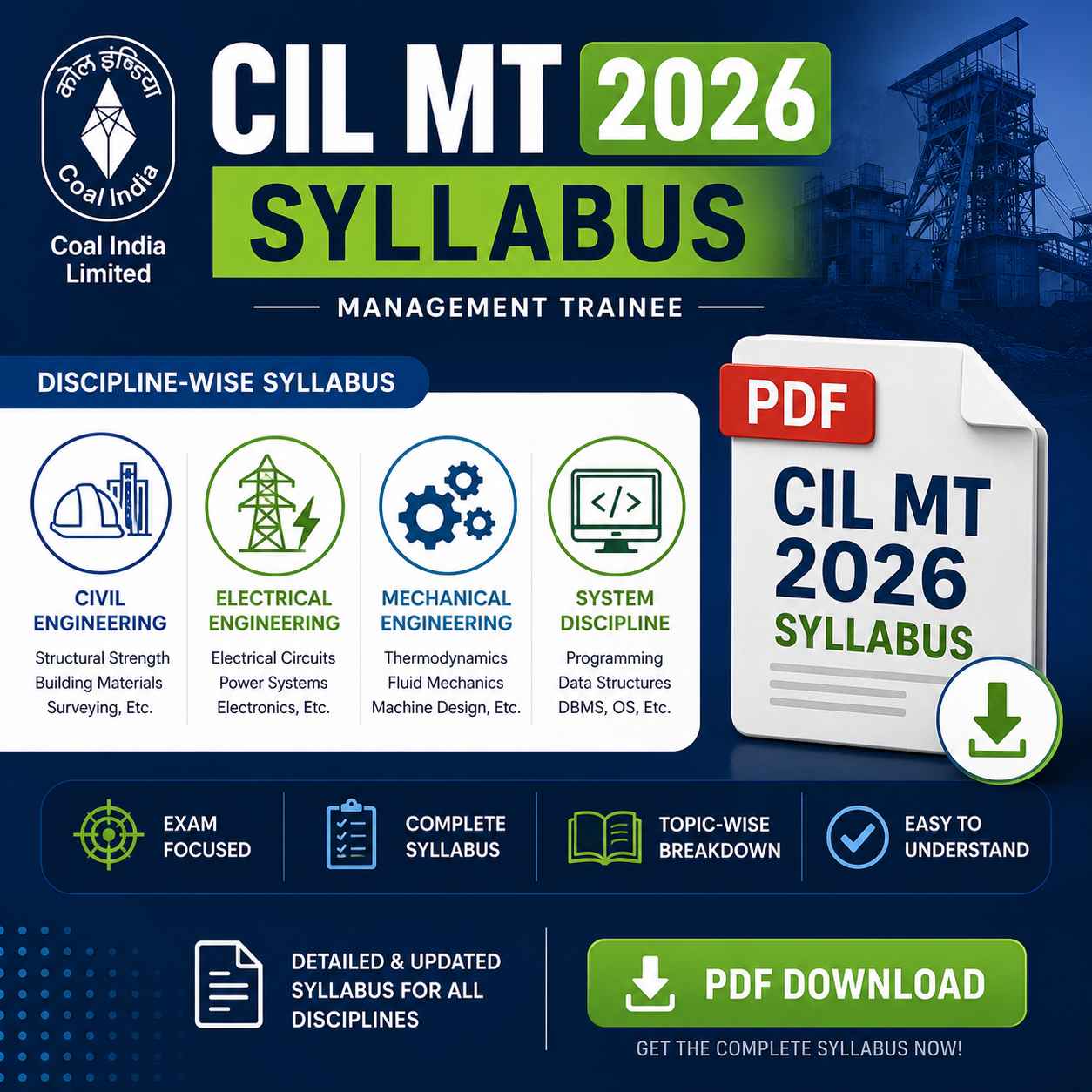
For a CS or IT graduate, this means the technical foundation built during preparation — database management, networking, operating systems, programming — remains directly relevant on the job. The concepts tested in the recruitment examination are not academic hurdles to be forgotten afterward; they map onto the actual responsibilities of the role. If you want to see how those fundamentals are assessed, the CIL MT syllabus and exam pattern guide lays out the System-discipline topics in full.
Postings and Location: A Realistic Note
One practical aspect deserves honest mention. Coal India operates through subsidiary companies, many of them located in coalfield regions across states such as Jharkhand, Chhattisgarh, Odisha, West Bengal, and Madhya Pradesh. New officers may be posted anywhere within these subsidiaries, including coalfield areas rather than major cities.
Candidates are asked to indicate location preferences, but the final posting depends on organisational requirements and the company’s decision. Anyone applying should be genuinely willing to serve in non-metro locations. For some, the smaller-town posting with company housing and a strong community is a feature rather than a drawback; for others accustomed to metro life, it requires adjustment. It is better to weigh this honestly before applying than to discover it after selection.
Is the CIL MT System Role Worth It?
For an IT graduate, the decision comes down to priorities. If the goal is the highest possible early cash income, cutting-edge technology work, and a metro lifestyle, private product companies remain the stronger fit. If the goal is long-term stability, a predictable and respected career ladder, robust retirement and medical benefits, and a balanced working life in a Maharatna public-sector enterprise, the CIL MT System role is a genuinely strong proposition.
The ₹60,000 basic pay in the E-1 grade, supplemented by DA, HRA, performance pay, and substantial non-cash benefits, builds into a compensation package that compares far more favourably with private offers than the headline number first suggests — particularly once the value of security and benefits is included over a multi-decade career.
Preparing for the Role
Compensation and career prospects only matter if you clear the examination first. The System-discipline paper tests core computer-science subjects, and candidates preparing for it will find significant overlap with other IT recruitment exams. The following guides on this site cover the relevant ground:
- CIL MT Syllabus and Exam Pattern 2026
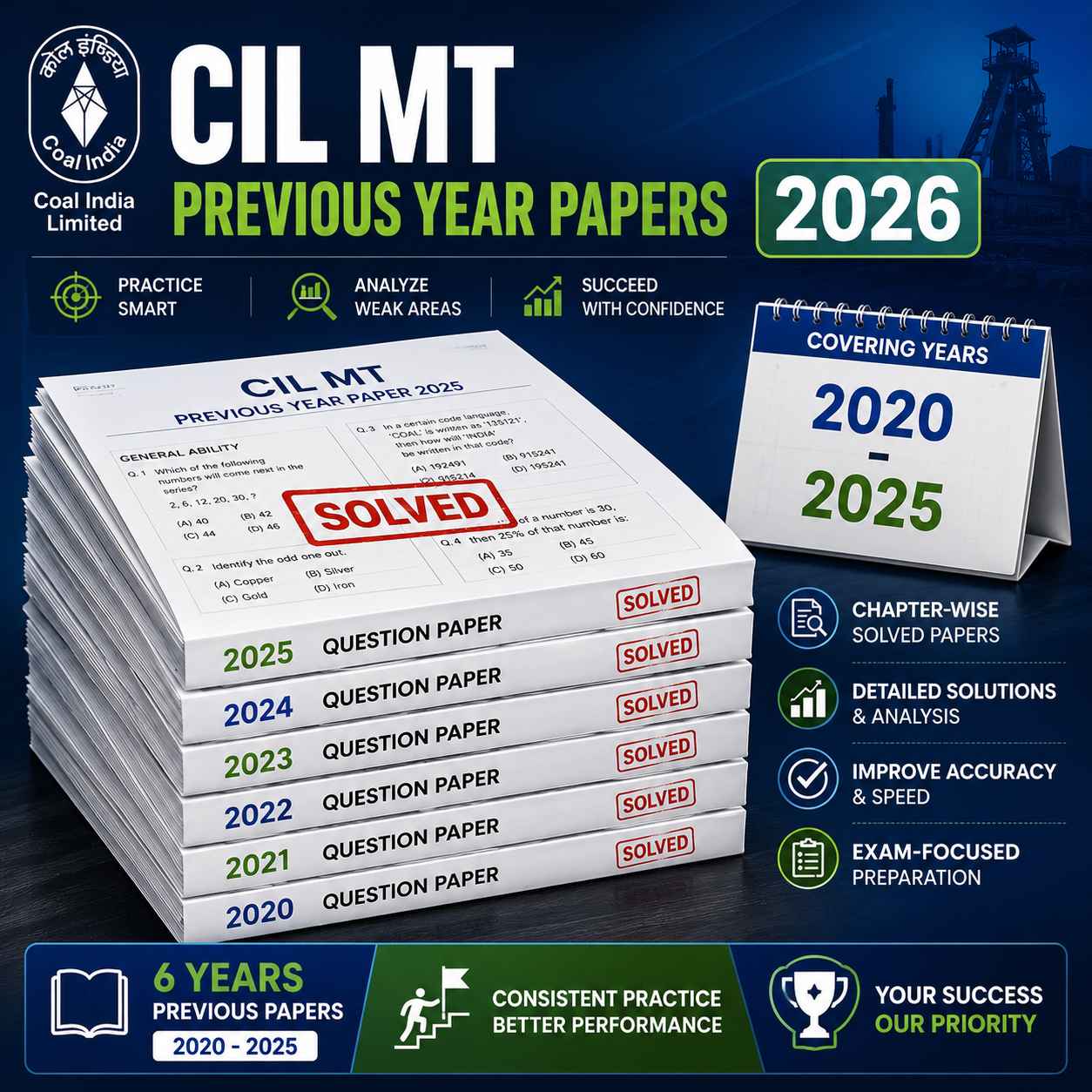
- CIL MT Previous Year Question Paper Analysis
- DBMS Complete Study Guide
- Computer Networks Study Guide
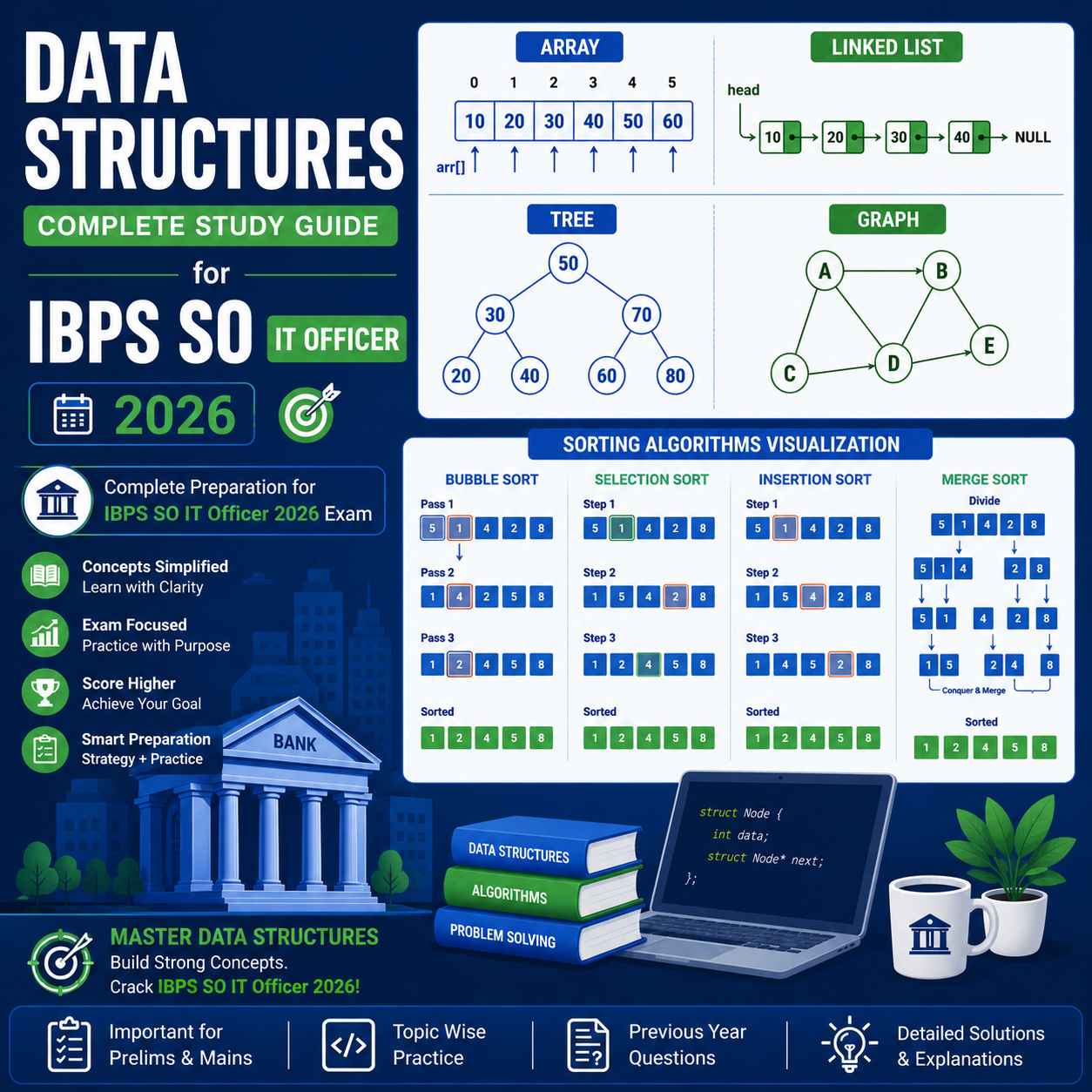
- Data Structures Study Guide
Final Assessment
The CIL MT System salary rewards a longer view. Judged purely on first-year cash, it can look unremarkable beside an aggressive private offer. Judged across a full career — accounting for steady progression through the executive grades, inflation-linked allowances, pension and gratuity, medical and housing support, and the security of a Maharatna PSU — it stands as one of the more attractive entry points available to an IT graduate in the government sector. For candidates who value stability and a defined path as much as immediate income, it is well worth the preparation effort.
If you are preparing for CIL MT 2026 in the System discipline, work through the syllabus systematically and practise previous papers. Questions on the role, the salary, or the preparation strategy are welcome in the comments.
Disclaimer: Salary components, the E-1 pay scale, and service bond conditions described here are based on Coal India Limited’s official notification, Advertisement 03/2026. Allowance rates, gross figures, and promotion timelines vary with company policy and prevailing rates and are not fixed. For authoritative and current details, always refer to the official Coal India website at www.coalindia.in.