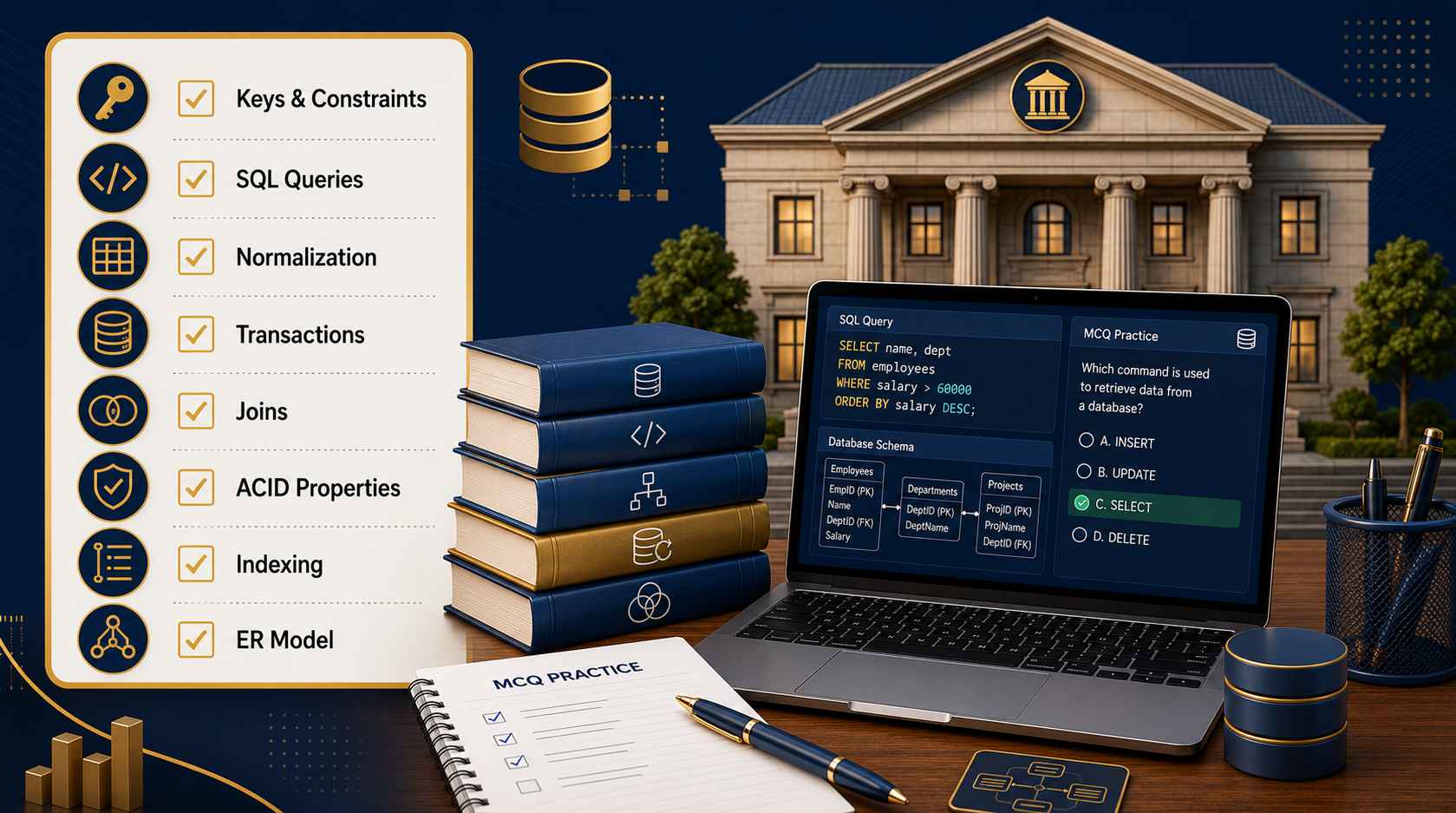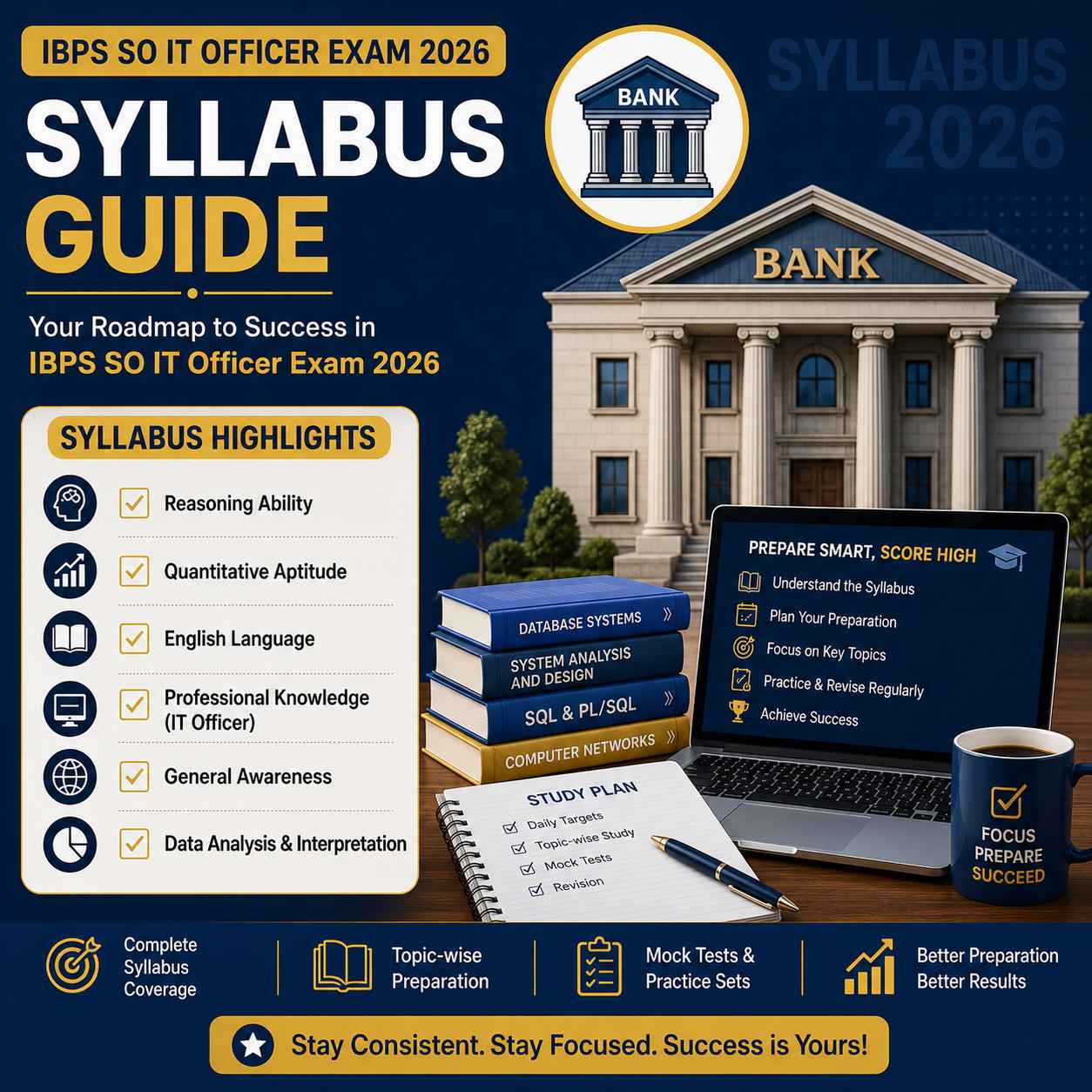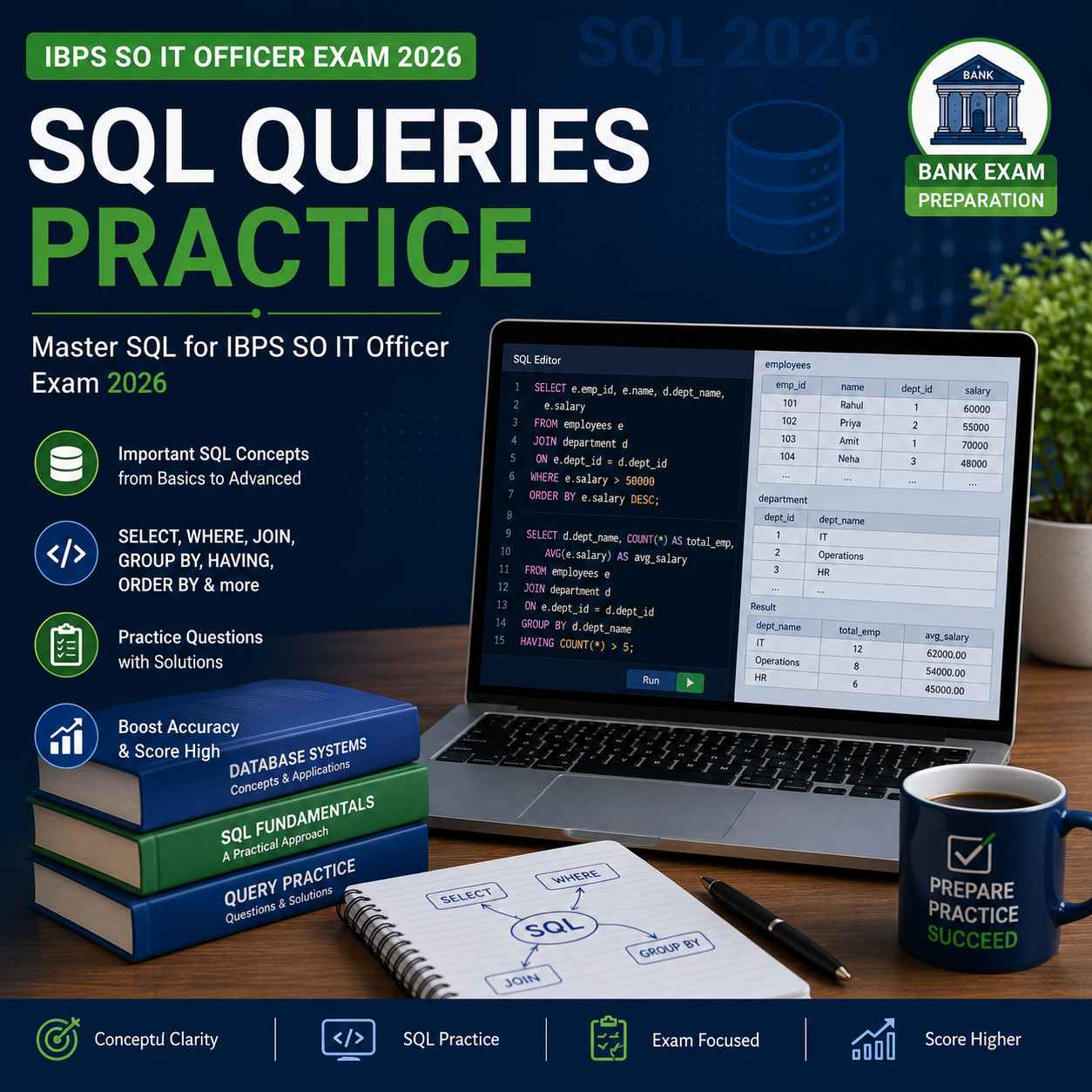

SQL MCQ for IBPS SO IT Officer 2026 is one of the most important practice areas for the Professional Knowledge section because SQL questions are usually direct, scoring, and easy to revise.
SQL is a core part of DBMS. If you are preparing for IBPS SO IT Officer, you must understand SQL commands, clauses, joins, constraints, keys, aggregate functions, transactions, views, and subqueries. These topics are often asked in IT Officer exams because banking systems use databases heavily for customer records, account transactions, loan data, KYC records, and reporting.
This article gives you 50 important SQL MCQs with answers for quick revision. Before solving these questions, you can revise our full guide on SQL for IBPS SO IT Officer 2026. For official exam-related updates, always check the IBPS official website.
For complete Professional Knowledge preparation, also read IBPS SO IT Officer Professional Knowledge Notes.
Why SQL Is Important for IBPS SO IT Officer
SQL stands for Structured Query Language. It is used to create, manage, update, retrieve, and control data stored in relational databases.
Simple meaning:
SQL = Language used to communicate with relational databasesFor IBPS SO IT Officer, SQL is important because it connects directly with DBMS, transactions, data integrity, and banking data management. Even if the question is from DBMS, many times SQL commands or SQL-based concepts are included.
Important SQL topics for IBPS SO:
DDL commands
DML commands
DQL command
DCL commands
TCL commands
WHERE clause
ORDER BY
GROUP BY
HAVING
Joins
Keys
Constraints
Aggregate functions
Subqueries
Views
Transactions
SQL MCQ for IBPS SO IT Officer 2026 should be practiced topic-wise. First revise command categories, then joins, then constraints and transactions. If your DBMS basics are weak, revise DBMS for IBPS SO IT Officer 2026 first.
For extra reference, you can also check the W3Schools SQL Tutorial or GeeksforGeeks SQL Tutorial.
Important SQL Topics for IBPS SO IT Officer
| Topic | Priority |
|---|---|
| SQL Command Types | Very High |
| SELECT Statement | Very High |
| WHERE Clause | Very High |
| Joins | Very High |
| Constraints | High |
| Keys | High |
| Aggregate Functions | High |
| GROUP BY and HAVING | High |
| Transactions | High |
| Views | Medium |
| Subqueries | Medium |
| Indexes | Medium |
If you have limited time, focus on DDL, DML, DCL, TCL, SELECT, WHERE, JOIN, GROUP BY, HAVING, constraints and transactions first.
You should also solve DBMS MCQs because SQL and DBMS are connected. Use our IBPS SO IT Officer DBMS MCQ 2026 article for more practice.
Quick Revision Notes Before SQL MCQs
Before solving SQL MCQ for IBPS SO IT Officer 2026, revise these short notes.
Types of SQL Commands
| Category | Full Form | Commands |
|---|---|---|
| DDL | Data Definition Language | CREATE, ALTER, DROP, TRUNCATE, RENAME |
| DML | Data Manipulation Language | INSERT, UPDATE, DELETE |
| DQL | Data Query Language | SELECT |
| DCL | Data Control Language | GRANT, REVOKE |
| TCL | Transaction Control Language | COMMIT, ROLLBACK, SAVEPOINT |
Important SQL Clauses
| Clause | Use |
|---|---|
| WHERE | Filters rows |
| ORDER BY | Sorts result |
| GROUP BY | Groups rows |
| HAVING | Filters groups |
| DISTINCT | Removes duplicate values |
Important Aggregate Functions
| Function | Use |
|---|---|
| COUNT() | Counts rows |
| SUM() | Adds values |
| AVG() | Finds average |
| MIN() | Finds minimum value |
| MAX() | Finds maximum value |
SQL Joins
| Join | Meaning |
|---|---|
| INNER JOIN | Returns matching records |
| LEFT JOIN | All left table records + matching right records |
| RIGHT JOIN | All right table records + matching left records |
| FULL JOIN | All records from both tables |
SQL MCQ for IBPS SO IT Officer 2026 — 50 Questions with Answers
Q1. SQL stands for:
A. Simple Query Language
B. Structured Query Language
C. Standard Question Language
D. System Query Logic
Answer: B. Structured Query Language
Q2. SQL is mainly used for:
A. Image editing
B. Database management
C. Video compression
D. Operating system installation
Answer: B. Database management
Q3. Which SQL command is used to retrieve data from a table?
A. INSERT
B. SELECT
C. UPDATE
D. DELETE
Answer: B. SELECT
Q4. Which SQL command is used to create a table?
A. MAKE
B. CREATE
C. BUILD
D. ADD
Answer: B. CREATE
Q5. Which SQL command is used to insert records into a table?
A. INSERT
B. ADD COLUMN
C. PUT
D. INCLUDE
Answer: A. INSERT
Q6. Which SQL command is used to modify existing data?
A. UPDATE
B. CREATE
C. DROP
D. SELECT
Answer: A. UPDATE
Q7. Which SQL command is used to delete records from a table?
A. REMOVE
B. DELETE
C. CLEAR TABLE
D. ERASE
Answer: B. DELETE
Q8. Which SQL command is used to delete a table structure permanently?
A. DELETE
B. DROP
C. REMOVE
D. CLEAR
Answer: B. DROP
Q9. Which command removes all rows but keeps the table structure?
A. DELETE
B. DROP
C. TRUNCATE
D. REMOVE
Answer: C. TRUNCATE
Q10. Which command is used to change the structure of a table?
A. ALTER
B. UPDATE
C. MODIFY DATA
D. CHANGE ROW
Answer: A. ALTER
SQL Command Category MCQs
Q11. CREATE command belongs to:
A. DML
B. DDL
C. DCL
D. TCL
Answer: B. DDL
Q12. INSERT command belongs to:
A. DDL
B. DML
C. DCL
D. TCL
Answer: B. DML
Q13. SELECT command belongs to:
A. DQL
B. DCL
C. TCL
D. DDL
Answer: A. DQL
Q14. GRANT command belongs to:
A. DDL
B. DML
C. DCL
D. DQL
Answer: C. DCL
Q15. COMMIT command belongs to:
A. TCL
B. DDL
C. DQL
D. DML
Answer: A. TCL
Q16. ROLLBACK is used to:
A. Save changes permanently
B. Undo transaction changes
C. Create a table
D. Delete database structure
Answer: B. Undo transaction changes
Q17. SAVEPOINT is used to:
A. Create a table
B. Mark a point inside a transaction
C. Delete rows permanently
D. Create an index only
Answer: B. Mark a point inside a transaction
Q18. Which command gives permission to a user?
A. ALLOW
B. GRANT
C. PERMIT
D. ACCEPT
Answer: B. GRANT
Q19. Which command removes permission from a user?
A. REVOKE
B. REMOVE
C. DELETE
D. DROP
Answer: A. REVOKE
Q20. Which command permanently saves transaction changes?
A. SAVEPOINT
B. COMMIT
C. ROLLBACK
D. UPDATE
Answer: B. COMMIT
SELECT, WHERE and Sorting MCQs
Q21. Which clause is used to filter rows?
A. ORDER BY
B. WHERE
C. GROUP BY
D. HAVING
Answer: B. WHERE
Q22. Which clause is used to sort records?
A. SORT BY
B. ORDER BY
C. FILTER BY
D. ARRANGE BY
Answer: B. ORDER BY
Q23. Which keyword removes duplicate values?
A. UNIQUE ONLY
B. DISTINCT
C. DIFFERENT
D. REMOVE DUPLICATE
Answer: B. DISTINCT
Q24. Which operator is used to check a range?
A. BETWEEN
B. RANGE
C. LIKE
D. CHECK
Answer: A. BETWEEN
Q25. Which operator is used for pattern matching?
A. MATCH
B. LIKE
C. BETWEEN
D. SORT
Answer: B. LIKE
Q26. Which symbol is used with LIKE to match any number of characters?
A. %
B. #
C. @
D. &
Answer: A. %
Q27. Which keyword is used to check multiple values?
A. IN
B. MULTI
C. MANY
D. VALUES
Answer: A. IN
Q28. Which operator checks NULL values?
A. = NULL
B. IS NULL
C. NULL = TRUE
D. CHECK NULL
Answer: B. IS NULL
Q29. Which order is default in ORDER BY?
A. DESC
B. ASC
C. RANDOM
D. REVERSE
Answer: B. ASC
Q30. DESC keyword is used for:
A. Ascending order
B. Descending order
C. Filtering rows
D. Grouping rows
Answer: B. Descending order
Aggregate Function and Grouping MCQs
Q31. Which function counts rows?
A. SUM()
B. COUNT()
C. TOTAL()
D. NUMBER()
Answer: B. COUNT()
Q32. Which function returns the average value?
A. AVG()
B. MEAN()
C. MID()
D. VALUE()
Answer: A. AVG()
Q33. Which function returns the highest value?
A. TOP()
B. HIGH()
C. MAX()
D. UPPER()
Answer: C. MAX()
Q34. Which function returns the lowest value?
A. LOW()
B. MIN()
C. LEAST()
D. SMALL()
Answer: B. MIN()
Q35. GROUP BY is used to:
A. Delete duplicate rows
B. Group rows based on one or more columns
C. Sort rows only
D. Create database
Answer: B. Group rows based on one or more columns
Q36. HAVING clause is used to:
A. Filter groups
B. Filter database names
C. Create tables
D. Delete columns
Answer: A. Filter groups
Q37. WHERE clause filters:
A. Rows before grouping
B. Groups after grouping
C. Tables only
D. Databases only
Answer: A. Rows before grouping
Q38. HAVING clause is mostly used with:
A. CREATE
B. Aggregate functions
C. DROP
D. INSERT only
Answer: B. Aggregate functions
Joins and Constraints MCQs
Q39. Which join returns matching records from both tables?
A. LEFT JOIN
B. INNER JOIN
C. RIGHT JOIN
D. FULL JOIN
Answer: B. INNER JOIN
Q40. LEFT JOIN returns:
A. Only matching rows
B. All rows from left table and matching rows from right table
C. All rows from right table only
D. No rows
Answer: B. All rows from left table and matching rows from right table
Q41. RIGHT JOIN returns:
A. All rows from right table and matching rows from left table
B. Only duplicate rows
C. Only left table rows
D. No rows
Answer: A. All rows from right table and matching rows from left table
Q42. Which constraint ensures a column cannot have NULL value?
A. UNIQUE
B. CHECK
C. NOT NULL
D. DEFAULT
Answer: C. NOT NULL
Q43. Which constraint ensures unique values in a column?
A. UNIQUE
B. DEFAULT
C. CHECK
D. NULL
Answer: A. UNIQUE
Q44. Which constraint is used to set a default value?
A. CHECK
B. DEFAULT
C. UNIQUE
D. PRIMARY
Answer: B. DEFAULT
Q45. Which key uniquely identifies each row?
A. Foreign Key
B. Primary Key
C. Secondary Key
D. Null Key
Answer: B. Primary Key
Q46. Foreign key is used to:
A. Connect two tables
B. Delete database
C. Sort rows
D. Encrypt column
Answer: A. Connect two tables
Views, Subqueries and Transactions MCQs
Q47. A view is:
A. Physical table only
B. Virtual table based on query result
C. Backup database
D. Primary key only
Answer: B. Virtual table based on query result
Q48. A subquery is:
A. Query inside another query
B. Table without rows
C. Only a database name
D. A type of index only
Answer: A. Query inside another query
Q49. Which SQL property is related to all-or-nothing transaction?
A. Atomicity
B. Durability
C. Isolation
D. Consistency
Answer: A. Atomicity
Q50. Which ACID property ensures committed data remains saved permanently?
A. Atomicity
B. Consistency
C. Isolation
D. Durability
Answer: D. Durability
Quick SQL Revision Table
| Topic | Must Remember |
|---|---|
| SELECT | Retrieves data |
| CREATE | Creates table/database |
| INSERT | Adds data |
| UPDATE | Modifies data |
| DELETE | Deletes rows |
| DROP | Deletes table structure |
| TRUNCATE | Removes all rows |
| WHERE | Filters rows |
| ORDER BY | Sorts rows |
| GROUP BY | Groups rows |
| HAVING | Filters groups |
| INNER JOIN | Matching rows |
| LEFT JOIN | All left + matching right |
| PRIMARY KEY | Unique row identifier |
| FOREIGN KEY | Connects tables |
| COMMIT | Saves transaction |
| ROLLBACK | Undo changes |
7-Day SQL Revision Plan for IBPS SO IT Officer
Use this plan after solving SQL MCQ for IBPS SO IT Officer 2026 questions.
| Day | Topic |
|---|---|
| Day 1 | SQL command categories |
| Day 2 | SELECT, WHERE, ORDER BY |
| Day 3 | Aggregate functions, GROUP BY, HAVING |
| Day 4 | Joins |
| Day 5 | Constraints and keys |
| Day 6 | Views, subqueries, transactions |
| Day 7 | Full revision + 100 MCQs |
Daily routine:
45 minutes SQL notes revision
45 minutes MCQ practice
20 minutes wrong-question notebook
This routine is enough if you stay consistent. SQL is scoring because commands and clauses are easy to revise repeatedly.
For more Professional Knowledge practice, solve Data Structures MCQ for IBPS SO IT Officer 2026 and Computer Networks MCQ for IBPS SO IT Officer 2026.
Common Mistakes Students Make in SQL
The first mistake is confusing DDL, DML, DCL and TCL. Make a small command table and revise it daily.
The second mistake is mixing WHERE and HAVING. Remember: WHERE filters rows, HAVING filters groups.
The third mistake is confusing DELETE, DROP and TRUNCATE. DELETE removes rows, DROP removes table structure, and TRUNCATE removes all rows but keeps table structure.
The fourth mistake is ignoring joins. INNER JOIN, LEFT JOIN and RIGHT JOIN are very important for SQL MCQ for IBPS SO IT Officer 2026.
The fifth mistake is not practicing output-based questions. Try to understand what a query returns, not just the definition of commands.
Final Thought
SQL MCQ for IBPS SO IT Officer 2026 practice can give you quick improvement in Professional Knowledge because SQL is one of the most scoring DBMS topics.
Do not memorize SQL blindly. Understand what each command does, how clauses work, and how joins combine tables. Once the basics are clear, MCQs become much easier.
Best strategy:
Revise command table
Practice joins
Solve MCQs
Mark wrong answers
Revise again
If you revise SQL along with DBMS, Operating System, Computer Networks and Data Structures, your IBPS SO IT Officer preparation will become much stronger. For OS revision, read Operating System for IBPS SO IT Officer 2026.
Frequently Asked Questions
Q1: Is SQL important for IBPS SO IT Officer 2026?
Yes, SQL is very important for IBPS SO IT Officer 2026 because questions from SQL commands, joins, constraints, keys, aggregate functions and transactions are commonly asked in Professional Knowledge.
Q2: What are the most important SQL topics for IBPS SO?
The most important topics are DDL, DML, DCL, TCL, SELECT, WHERE, GROUP BY, HAVING, joins, keys, constraints, views, subqueries and transactions.
Q3: How many SQL MCQs should I solve before the exam?
You should solve at least 150–200 SQL MCQs before the exam. Focus on wrong questions and revise the related concepts repeatedly.
Q4: What is the difference between WHERE and HAVING?
WHERE filters rows before grouping, while HAVING filters groups after GROUP BY. HAVING is commonly used with aggregate functions.
Q5: What is the difference between DELETE, DROP and TRUNCATE?
DELETE removes selected rows, DROP removes the table structure, and TRUNCATE removes all rows while keeping the table structure.
Q6: Are joins important for IBPS SO IT Officer?
Yes, joins are important. Revise INNER JOIN, LEFT JOIN, RIGHT JOIN and FULL JOIN with simple examples.
Q7: Which SQL command is used to save transaction changes?
COMMIT is used to save transaction changes permanently. ROLLBACK is used to undo transaction changes.
Q8: How should I revise SQL quickly?
Revise SQL command categories, clauses, joins, constraints and transactions. Then solve topic-wise MCQs and maintain a wrong-question notebook.