
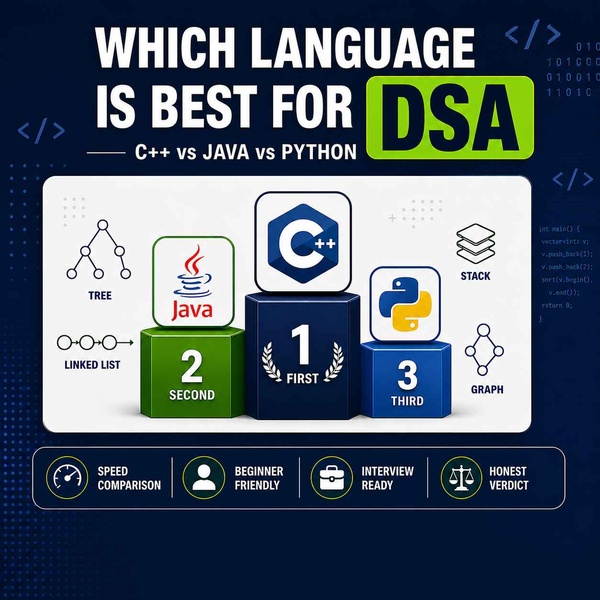
If you are starting your Data Structures and Algorithms journey, one question stops you before you even write a line of code: which language is best for DSA? It is a fair question, and the wrong choice can genuinely slow you down — either by adding unnecessary complexity or by hiding the fundamentals you actually need to understand. Having worked as a Full Stack Developer for over six years and having prepared for technical interviews myself, I can tell you the answer is clearer than most beginners expect.
This guide answers which language is best for DSA honestly, comparing C++, Java, Python, and JavaScript across the factors that genuinely matter — speed, syntax, library support, interview acceptance, and learning curve. By the end, you will know exactly which language fits your goal, whether that is competitive programming, placement interviews, or simply learning the concepts well.
Quick Answer: Which Language is Best for DSA?
For most learners, C++ is the best language for DSA, followed closely by Java. C++ offers the best balance of execution speed, a powerful standard library (STL), and near-universal acceptance in competitive programming and interviews. Java is an excellent second choice, especially for placement preparation. Python is the easiest to learn and great for understanding concepts, though slower in execution.
| Language | Best For | Rating |
|---|---|---|
| C++ | Competitive programming, interviews, speed | ⭐⭐⭐⭐⭐ |
| Java | Placements, structured learning | ⭐⭐⭐⭐ |
| Python | Beginners, concept clarity | ⭐⭐⭐ |
| JavaScript | Web developers already using JS | ⭐⭐ |
Why C++ is Often the Best Language for DSA
When people ask which language is best for DSA, the competitive programming community answers C++ almost unanimously, and there are solid reasons behind that.
The first is raw speed. C++ executes far faster than Python or JavaScript, which matters when a problem has tight time limits — something common on platforms like Codeforces and during timed contests. A solution that times out in Python often passes comfortably in C++.
The second is the Standard Template Library, or STL. It gives you ready-made implementations of vectors, sets, maps, stacks, queues, priority queues, and sorting — so you spend your time solving the problem rather than rebuilding basic structures. Once you are comfortable with STL, your coding speed in contests increases dramatically.
The third reason is acceptance. C++ is the default in most competitive programming circles and is fully accepted in nearly every company interview. You are never at a disadvantage choosing it.
When Java is the Best Language for DSA
Java is a strong answer to which language is best for DSA, particularly if your main goal is campus placements rather than competitive programming.
Many Indian companies and their coding rounds are Java-friendly, and a large share of placement aspirants use it comfortably. Java’s structured, strongly-typed nature also enforces good habits, which helps beginners build discipline. Its Collections framework — ArrayList, HashMap, HashSet, PriorityQueue — serves a similar role to C++ STL, giving you reliable built-in structures.
The trade-off is verbosity. Java requires more boilerplate code than C++ or Python, which can feel slow during contests where every second counts. For interviews and learning, though, this is rarely a real problem.
Is Python Good for DSA?
Python deserves an honest assessment here. As an answer to which language is best for DSA, it is the easiest to learn and the clearest for understanding concepts — but it comes with a real limitation.
Python’s simple, readable syntax lets beginners focus on the logic of an algorithm rather than fighting with the language. Writing a linked list or a recursion in Python is genuinely cleaner than in C++ or Java. For someone learning DSA for the first time, this clarity is valuable.
The limitation is speed. Python is significantly slower in execution, which means some competitive programming problems with strict time limits will time out even when your logic is correct. For pure interview preparation and concept-building this is rarely an issue, but for serious competitive programming, it becomes a genuine constraint.
What About JavaScript for DSA?
JavaScript is usable for DSA but is rarely anyone’s first recommendation. If you are already a web developer comfortable in JavaScript, you can certainly learn DSA in it — the core concepts are language-independent. However, JavaScript lacks the rich built-in data structure support of C++ STL or Java Collections, and it is less commonly accepted in competitive programming. For most learners, it is a practical choice only when you are already deeply invested in the JavaScript ecosystem.
Which Language is Best for DSA — Factor-by-Factor Comparison
| Factor | C++ | Java | Python |
|---|---|---|---|
| Execution Speed | Fastest | Fast | Slow |
| Syntax Simplicity | Moderate | Verbose | Easiest |
| Built-in Structures | STL (excellent) | Collections (good) | Built-in (good) |
| Competitive Programming | Best | Good | Limited |
| Interview Acceptance | Universal | Universal | Universal |
| Learning Curve | Moderate | Moderate | Easiest |
Which Language Should You Choose? (Honest Recommendation)
Here is my straightforward advice based on your specific goal:
- For competitive programming: Choose C++. The speed and STL are decisive.
- For campus placements: C++ or Java both work well — pick the one your college and peers use, so help is easy to find.
- For learning DSA as a complete beginner: Python first to grasp concepts, then shift to C++ or Java for serious practice.
- If you are already a web developer: You can start with JavaScript, but consider moving to C++ or Java as you get serious.
One important point: the language matters far less than your consistency. A candidate who practises 300 problems in Python will outperform one who knows C++ but has solved only 50. Pick one language, stick with it, and focus on solving problems daily.
Common Mistakes When Choosing a Language for DSA
- Switching languages repeatedly instead of mastering one
- Choosing a language because of hype rather than your actual goal
- Picking Python for competitive programming, then struggling with time limits
- Avoiding C++ out of fear when it is genuinely the strongest option
- Spending weeks deciding the language instead of starting to practise
- Ignoring the built-in library (STL or Collections) and rebuilding everything manually
How to Start Learning DSA After Choosing a Language
Once you have settled which language is best for DSA for your goal, the path forward is simple. Learn the basic syntax and the built-in data structures of your chosen language first. Then begin with foundational topics — arrays, strings, linked lists, stacks, and queues — before moving to trees, graphs, and dynamic programming.
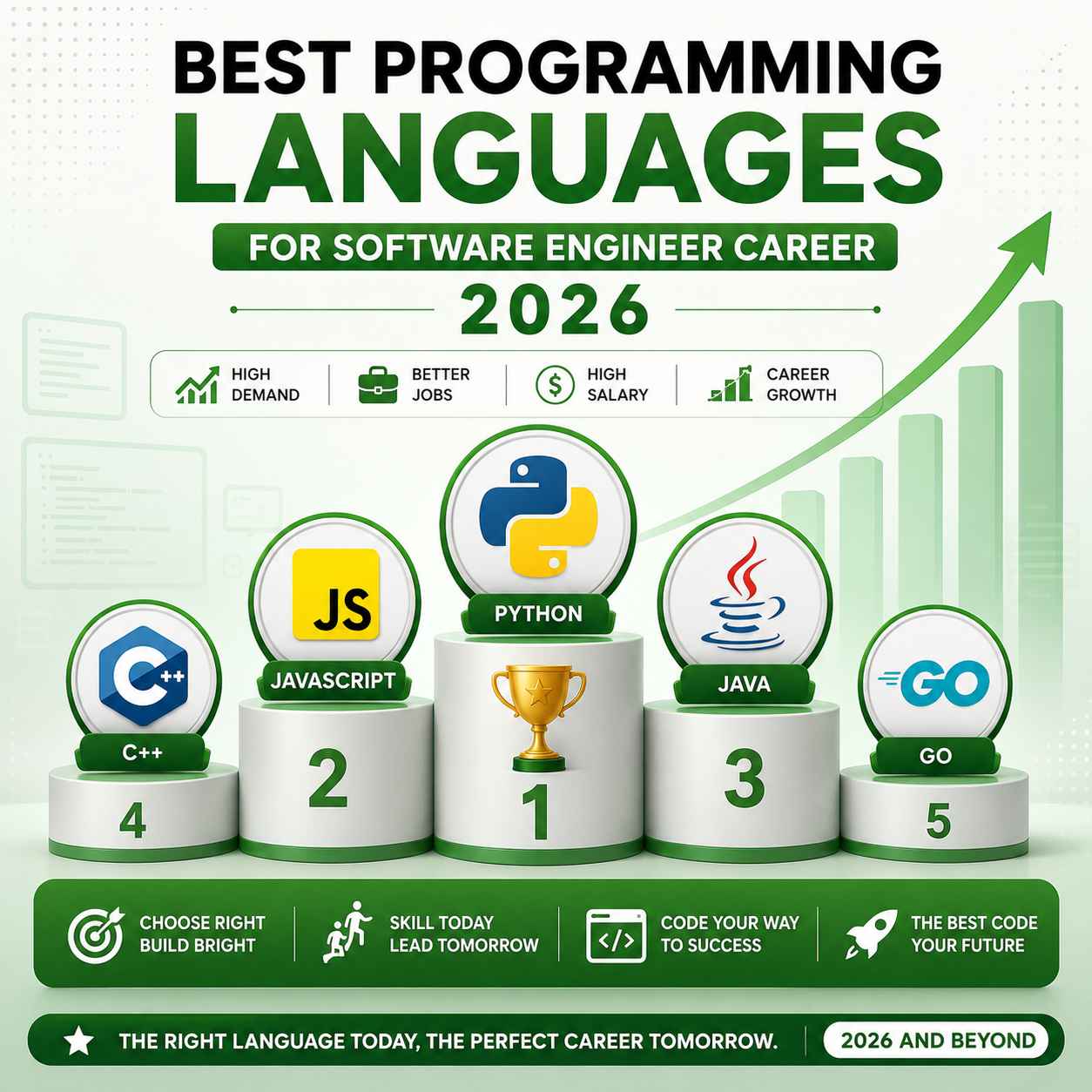
Practise consistently on platforms like LeetCode, HackerRank, or Codeforces. Solve problems by difficulty, starting easy and progressing gradually. Aim for steady daily practice rather than occasional long sessions. If you are unsure which language to commit to for your broader career beyond DSA, our guide on which language is best for software engineer covers the wider picture.
Frequently Asked Questions
Which language is best for DSA for beginners?
For complete beginners, Python is the easiest to start with because of its simple syntax, letting you focus on concepts. However, shift to C++ or Java once you are comfortable, especially for competitive programming or placements.
Is C++ better than Java for DSA?
C++ is generally better for competitive programming due to its speed and STL. Java is excellent for placements and structured learning. Both are universally accepted in interviews, so either is a safe choice.
Can I do DSA in Python?
Yes. Python is great for learning DSA concepts and for interviews. Its only real limitation is slower execution, which can cause time-limit issues in some competitive programming problems.
Which language do most competitive programmers use?
The vast majority of competitive programmers use C++, mainly because of its execution speed and the powerful Standard Template Library (STL).
Does the choice of language affect interview selection?
No. Interviewers care about your problem-solving ability and clarity, not your language. C++, Java, and Python are all fully accepted in technical interviews.
Final Verdict: Which Language is Best for DSA?
To settle which language is best for DSA once and for all: C++ is the strongest overall choice for its speed and STL, Java is an excellent option for placements, and Python is ideal for beginners learning concepts. There is no universally “wrong” choice among these three — what truly determines your success is picking one and practising consistently.
Stop overthinking the language decision and start solving problems. Choose based on your goal, commit to it, and build the daily habit of practice. That consistency, far more than the language itself, is what will make you strong at Data Structures and Algorithms.
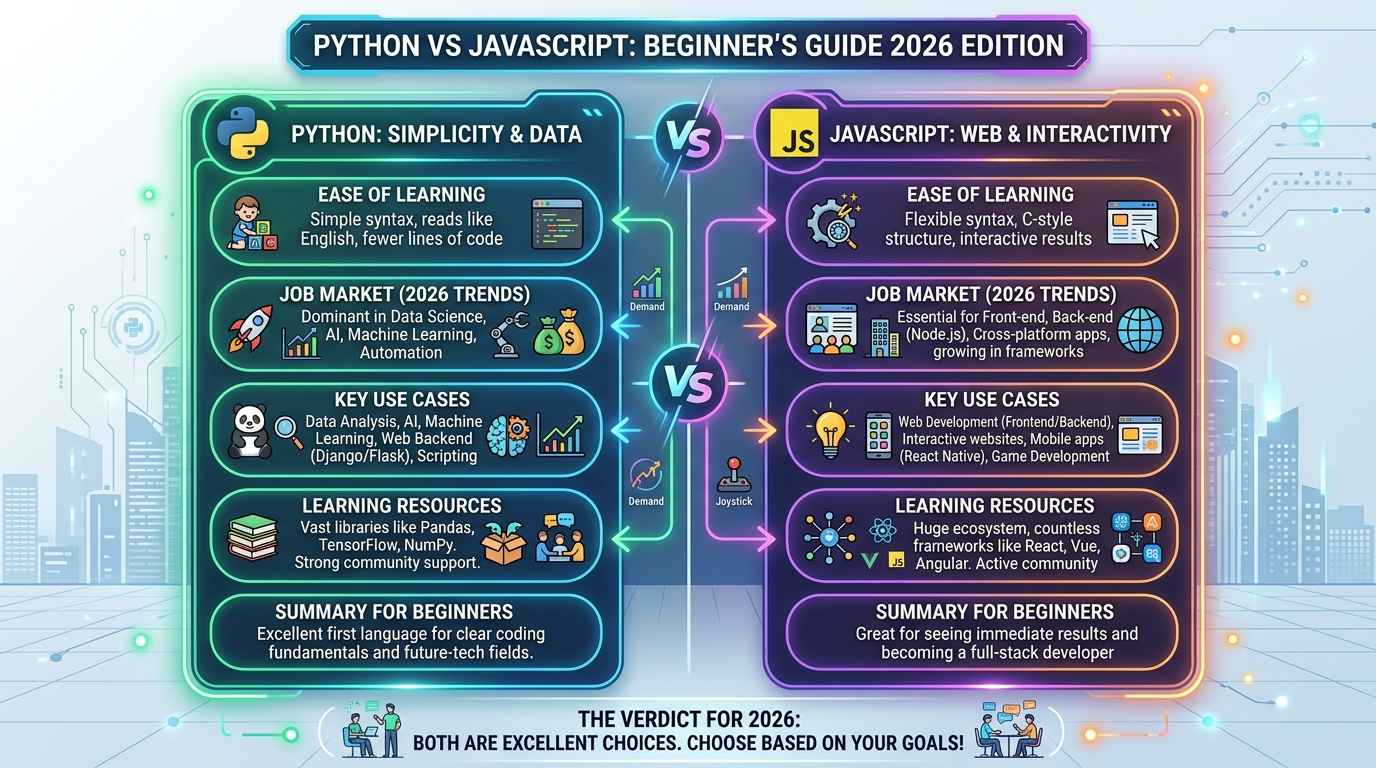
For more programming and career guidance, explore our Python vs JavaScript comparison and Data Structures complete study guide. Have questions about your specific situation? Drop them in the comments.
Disclaimer: The recommendations in this article are based on general industry practice and personal experience as a Full Stack Developer. The best language for you depends on your individual goals, college environment, and career direction. All three major languages — C++, Java, and Python — are valid choices for learning Data Structures and Algorithms.


3 comments on “Which Language is Best for DSA? C++ vs Java vs Python”